Waikiki Condos: a buyer’s guide to beach-block living
The short answer
Beach-block living in Waikiki means a condo one or two streets back from the sand, inside the resort district. Most Waikiki condos do not allow short-term renting. The ones that do are named in this article: 39 buildings in three groups, plus six more buildings where only one to three units can rent, and the buildings where short-term renting is not allowed at all. The list below is the whole point of this article. The City does not publish a building-by-building list, so this article gives you the list itself, measured against the City’s own rules.
Contents
- The short answer
- What does beach-block actually mean?
- How does short-term renting work in Honolulu?
- The list, part 1: Hotel and Resort buildings
- The list, part 2: Transient Vacation buildings
- The list, part 3: NUC units only
- Buildings where only one to three units can rent
- Buildings where short-term renting is not allowed
- A note on the count
- What does a Waikiki condo cost to hold?
- How does financing work for a Waikiki condo?
- FAQ
- Get your free Home Buyer Game Plan
What does beach-block actually mean?
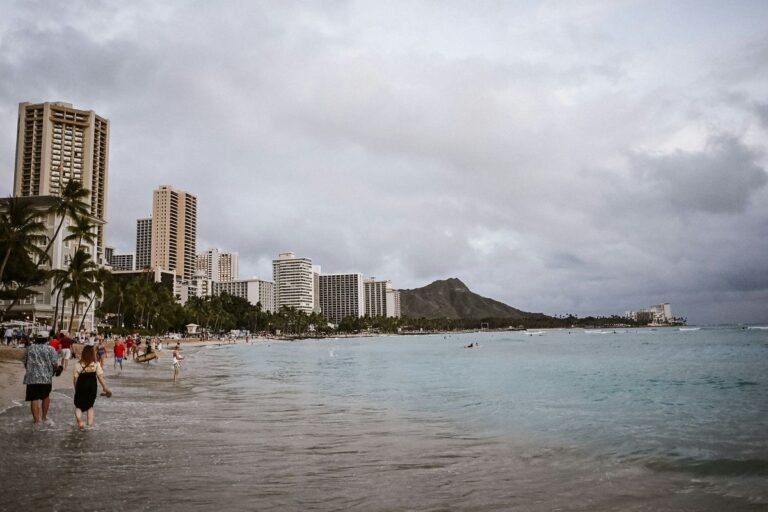
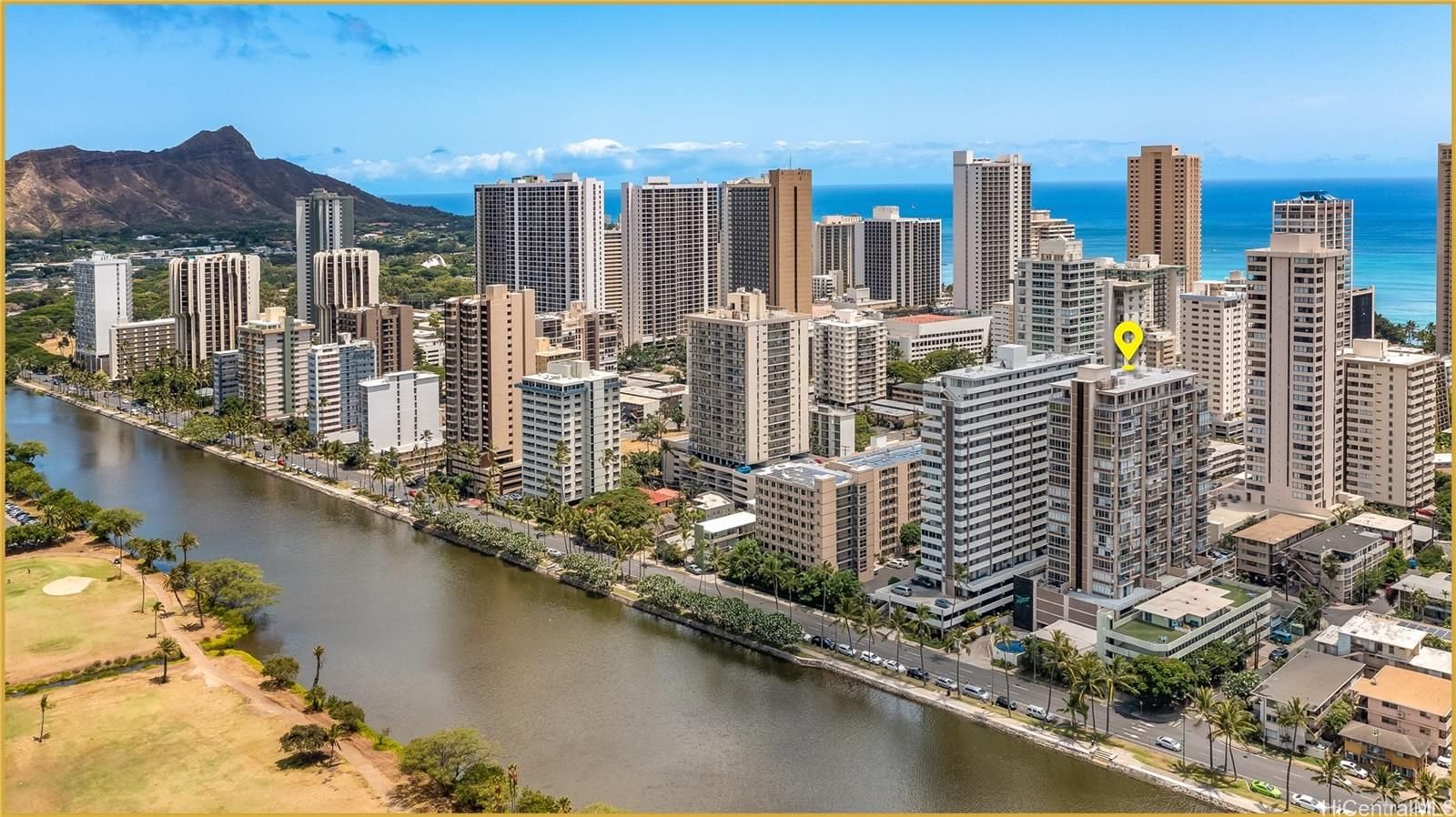
Waikiki is Honolulu’s resort district, bounded by Kapahulu Avenue on the east, Ala Wai Boulevard on the west, Kuhio Avenue on the north, and the beach shoreline on the south. The Ala Wai Canal forms the inland edge. Waikiki has its own zoning rules, the Waikiki Special District, which governs height, density, setbacks, and open space.
Beach-block means the blocks just back from the sand: the streets between Kalakaua Avenue and the Ala Wai, a short walk to the beach rather than a unit on it. You trade the oceanfront price for a lower buy-in and the same neighborhood. The walk to the sand is minutes. The rules that govern the building are the same ones that govern the oceanfront towers, and those rules are what this article is about.
How does short-term renting work in Honolulu?
A short-term rental is a lodging rented for less than 30 consecutive days. The City allows it only in three ways.
First, the underlying zoning is Resort Mixed Use and the building’s own rules do not restrict short-term renting. Second, the individual unit holds a NUC, a Nonconforming Use Certificate, which the City issued to units operating before October 22, 1986 and stopped issuing in September 1990. Third, the building is a grandfathered nonconforming hotel and the building’s rules do not restrict short-term renting.
When zoning and building rules disagree, the stricter rule wins. A resort-zoned building whose house rules require 30-day minimum stays cannot rent short-term. An apartment-zoned building whose owners have tolerated short-term renting for years cannot rent short-term either, because the zoning rule is the stricter one.
City law sets a 90-day minimum for short-term rentals outside resort areas under Ordinance 22-7. A December 21, 2023 court injunction in the HILSTRA case bars the city from enforcing that 90-day floor on rentals that existed before October 23, 2022. The city still enforces the under-30-day line. A separate 2019 law, Ordinance 19-18, prohibits short-term rentals outside resort or resort mixed-use districts unless the property holds a NUC.
Full record: City and County of Honolulu, Department of Planning and Permitting, short-term rentals page – https://www.honolulu.gov/dpp/permitting/str/
The list, part 1: Hotel and Resort buildings
These 19 buildings were built as hotels. They meet the current hotel definition and also met the old hotel definition when they were built. The guide states no DPP short-term rental registration is required for them. Units in this group are taxed at the Hotel and Resort rate, $13.90 per $1,000 of assessed value for FY 2026-27. Building names, groupings, tenure, and leasehold dates below come from Hawaii Living’s condotels guide, updated February 23, 2026, checked against the City’s rules on the DPP page linked above.
Ala Moana Hotel Condo – Business Mixed Use. Hotel desk on site. Fee simple. Owners may not occupy full-time, and most units are small lodging units with a full kitchen only in the one and two bedrooms.
Aloha Surf Hotel – Apartment zoning, grandfathered nonconforming hotel. Hotel desk on site. Fee simple. Studios only, no full kitchen.
Bamboo – Resort Mixed Use. Hotel desk on site. Fee simple. Studios and one bedrooms, with a full kitchen in 8 of the one bedrooms.
Hawaiian Monarch – Apartment zoning, grandfathered nonconforming hotel. The building’s 50 hotel rooms are owned by one operator and individual owners are not serviced by the hotel desk. Mix of fee simple and leasehold, with the leasehold reported to expire in 2054.
Diamond Head Beach Hotel – Medium Density Apartment. The DPP recognised it as a grandfathered nonconforming hotel, added to the guide in 2025. Leasehold, reported to expire in 2032. Hotel desk on site. The only such building on the Diamond Head and Gold Coast side.
Hawaiian King – Apartment zoning. The DPP recognised it as a grandfathered nonconforming hotel effective December 2023. Leasehold, reported to expire in 2036. One bedrooms with full kitchens.
Inn On The Park – Apartment zoning. The DPP recognised it as a grandfathered nonconforming hotel effective August 2024. Leasehold, reported to expire in 2035. Studios with no full kitchen.
Ilikai Apartments – Resort Mixed Use. Hotel desk on site. Fee simple. One of three Waikiki condos with direct beach access without crossing a street.
Imperial Hawaii Resort – Resort Mixed Use. Leasehold, reported to expire in 2052. Mostly timeshare units. Only eight individually owned units exist in the whole building, and the hotel operation serves timeshare units only.
Island Colony – Apartment zoning, grandfathered nonconforming hotel. Fee simple with a few leasehold units, reported to expire in 2044. Hotel desk on site. Flag: short-term renting here is allowed only with a signed licence agreement with the operator and reclassification of the unit to Hotel and Resort. A unit without that agreement cannot rent short-term, even though the building sits in this group.
Ka Lai Waikiki Beach – Resort Mixed Use. Formerly Trump Tower Waikiki, rebranded February 7, 2024. Hotel desk on site. Fee simple. Only the hotel operator and a few approved third-party agencies may manage short-term rentals. No deeded parking stalls, but owners get complimentary parking while staying in their unit.
Luana Waikiki – Resort Mixed Use. Hotel desk on site. Fee simple. Studios and one bedrooms.
Pacific Monarch – Hotel desk on site. Fee simple with a few leasehold units, reported to expire in 2044. Rooftop pool. Zoning is not stated in the guide for this building.
Palms at Waikiki – Apartment zoning. Hotel desk on site. Fee simple. The building’s governing documents prohibit owners from claiming a homeowner’s exemption. Some units come with one parking stall.
Regency on Beachwalk – Resort Mixed Use. Hotel desk on site. Fee simple. One and two bedrooms with full kitchens.
Renaissance Residences Honolulu – Business Mixed Use. Downtown and Ala Moana area, not central Waikiki. Hotel desk on site. Fee simple.
Ritz-Carlton Waikiki – Resort Mixed Use. Hotel desk on site. Fee simple. Only the hotel operator and a few approved third-party agencies may manage short-term rentals. No deeded parking stalls, but owners get complimentary parking while staying in their unit. Tower 1 was completed in 2016 and Tower 2 in 2018.
Royal Garden at Waikiki – Apartment zoning. Mostly timeshare, about 140 timeshare units and about 68 individually owned units. The hotel operation manages timeshare units only. Fee simple.
Waikiki Grand Hotel – Resort Mixed Use. Hotel desk on site. Fee simple with a few leasehold units, reported to expire in 2043. Studios with some full kitchens. Very few units come with a parking stall.
The list, part 2: Transient Vacation buildings
These 16 buildings are zoned Resort Mixed Use, or they are grandfathered hotels that meet the current hotel definition but did not meet the old one when they were built. Units here are taxed at the Transient Vacation rate, $9.00 per $1,000 of assessed value up to $800,000 and $11.50 per $1,000 above it, for FY 2026-27. Except for NUC units inside them, an owner must register the unit with DPP, $1,000 to start and $500 a year to renew, and must register again after every sale, because the registration does not run with the land.
2465 Kuhio At Waikiki – Resort Mixed Use. No hotel desk. Fee simple. Two bedrooms with large balconies. The AOAO removed its short-term rental restriction in 2019, which is the guide’s own example of a building changing its rules.
Cabana at Waikiki – Resort Mixed Use. No hotel desk. Fee simple. One bedrooms. Three units come with one parking stall.
Executive Centre – 1088 Bishop Street, downtown. BMX-4 Business Mixed Use. Hotel desk on site. Mainly leasehold, reported to expire in 2053, with some fee simple, and the fee is being offered on all units. The DPP is quoted in the guide as saying only some units, TMK 2-1-012:004, are in the hotel group where short-term rentals are permitted. The unit, not just the building, decides here.
Ilikai Marina – Resort Mixed Use. No hotel desk. Fee simple. One of three Waikiki condos with direct beach access without crossing a street.
Kalakauan – Resort Mixed Use. No hotel desk. Fee simple with a few leasehold units, reported to expire in 2035. One bedrooms. The house rules reportedly state that renting must follow the zoning. About 30 percent of units come with one parking stall.
Kuhio Village – Resort Mixed Use. No hotel desk. Two towers with different tenure: Tower 1 is fee simple and Tower 2 is leasehold, reported to expire in 2033. Studios and one bedrooms with no full kitchen.
Marine Surf Waikiki – Resort Mixed Use. No hotel desk. Fee simple. Studios with full kitchens. All units come with one parking stall.
Niihau Apartments – Resort Mixed Use. No hotel desk. Fee simple. One to three bedrooms.
Royal Aloha – Resort Mixed Use. No hotel desk. Leasehold, reported to expire in 2041. One and two bedrooms. About 30 percent of units come with one parking stall.
Scandia Towers – Resort Mixed Use. No hotel desk. Fee simple. Two bedrooms and two large penthouses. Flag: the guide contradicts itself on this building. It lists Scandia here and says active short-term rental units pay the HOA an extra $200 a month. In another section the same guide says Scandia’s house rules restrict rentals to 30 days or more, which means no short-term renting. The building’s own rules decide, and until they are confirmed, do not treat a Scandia Towers unit as a legal short-term rental.
Seashore – Resort Mixed Use. No hotel desk. Fee simple with a few leasehold units, reported to expire in 2034. Studios.
Tradewinds Plaza – Resort Mixed Use. No hotel desk. Fee simple with a few leasehold units, reported to expire in 2032. Studios. Several units come with one parking stall.
Waikiki Beach Tower – Resort Mixed Use. Hotel desk on site. Mix of fee simple and leasehold, reported to expire in 2039. Two bedrooms.
Waikiki Banyan – Apartment zoning, grandfathered nonconforming hotel, and all non-NUC units may also rent short-term. Hotel desk on site. Fee simple with a few leasehold units, reported to expire in 2035. One bedrooms. All units come with one unassigned parking stall. Two towers with shared amenities.
Waikiki Shore – Resort Mixed Use. Hotel desk on site. Fee simple. The only condo located directly on Waikiki Beach.
Waikiki Sunset – Apartment zoning, grandfathered nonconforming hotel, and all non-NUC units may also rent short-term. Hotel desk on site. Mix of fee simple and leasehold, reported to expire in 2036. One and two bedrooms. All units come with one unassigned parking stall.
The list, part 3: NUC units only
These four buildings sit in Apartment zoning. They are not resort zoned and they are not grandfathered hotels. Only the specific units holding a NUC may rent short-term. Every other unit in these buildings may not. NUC counts below are the guide’s approximate figures. A NUC stays with the unit when it sells, and the owner pays a $500 annual renewal. No new NUCs have been issued since September 1990, and a NUC that lapses is gone for good. The guide counts 793 NUCs still current in Honolulu.
444 Nahua – Fewer than 30 NUCs. Fee simple with a few leasehold units, reported to expire in 2051. Studios and one bedrooms. Every unit comes with at least one parking stall.
Four Paddle – Fewer than 20 NUCs. Fee simple. Studios and one bedrooms. Every unit comes with at least one parking stall.
Royal Kuhio – Fewer than 65 NUCs. Mainly leasehold, reported to expire in 2041, with some fee simple. One to three bedrooms. Some units are timeshare, and three timeshare management companies keep an office in the building.
Waikiki Marina Condominium – Fewer than 60 NUCs. Mostly fee simple with a few leasehold units, reported to expire in 2048. Studios. The hotel operator in the neighbouring building manages short-term rentals only for NUC units.
Buildings where only one to three units can rent
Six more buildings hold just one to three NUC units each: 2121 Ala Wai, Aloha Towers, Monte Vista, 250 Ohua, Canal House, and Fairway Villa. In each, only those one to three NUC units may rent short-term. Every other unit in the building may not. A listing that says a unit is in a building with NUCs is not the same as a unit that holds a NUC, and that distinction is where buyers lose money.
Buildings where short-term renting is not allowed
No NUCs exist in Waikiki Lanais, Waikiki Skytower, and Waikiki Park Heights, and short-term renting is not allowed in any of them. The guide adds that the first two have apartment zoning but their associations have tolerated short-term rental activity for years. Tolerance is not legality, because the more restrictive zoning rule prevails.
Foster Tower and Crescent Park sit on resort mixed-use parcels, but their house rules restrict rentals to 30 days or more, so no short-term renting. Zoning alone is never enough. Scandia Towers is named in the same passage of the guide, which is the contradiction flagged in the Transient Vacation list above.
Outside Waikiki, the same three paths apply in the resort areas at Ko Olina and Turtle Bay and the mapped apartment areas near them and Hoakalei. No building-by-building list for those areas was verified for this article, so none is published here.
A note on the count
The guide’s headline says only 30 of 130 Waikiki condo buildings allow short-term rentals. The list as published names 39 buildings across the three groups above, plus six more with only one to three NUC units each. The headline and the list disagree, and this article does not resolve that disagreement. The 39 names above are the guide’s list, not a City-certified count. The City publishes the rules and an eligibility map, not a building list.
What does a Waikiki condo cost to hold?
Start with the islandwide reference point. The median Oahu condo sold for $499,000 in October 2026 (Honolulu Board of REALTORS), with a median days on market of 49 days. Waikiki units vary widely around that number by size, floor, view, and building.
The monthly fee is part of the purchase price. The median advertised Oahu condo fee was $882 a month in February 2026 (UHERO Hawaii Housing Factbook 2026), and the average from Honolulu Board of REALTORS sales data was $1,051 a month. Waikiki buildings with pools, front desks, and elevators often run above those figures, so get the actual fee for the building before you compare it with anything.
Listings can also hide part of the cost in a second line. Always add the maintenance fee and the “other fee” together, and ask what the other fee is paying for and when it ends. An assessment is often a loan installment for completed capital work, and it runs for years.
Property tax depends on the unit’s class. Honolulu property tax is $3.50 per $1,000 of assessed value for the Residential class on owner-occupied homes, minus a $120,000 homeowner exemption. A unit in the Hotel and Resort group is taxed at $13.90 per $1,000. A unit in the Transient Vacation group is taxed at $9.00 per $1,000 on the first $800,000 and $11.50 above it. That is two to four times the Residential rate on the same assessed value. If an owner dedicates a unit for residential use, it is reclassified to a residential tax class and cannot rent short-term, and breaking the dedication triggers back taxes.
Short-term rental income carries the 2026 lodging tax of 18.712 percent, off the top of rental income, before the HOA fee, management, and cleaning.
Insurance can move the fee fast. Ask for the building’s master policy summary and the deductible per unit before you offer. Legislative testimony in 2024 cited 375 to 390 Hawaii condo buildings as underinsured for hurricane coverage, and that status can decide whether a unit is financeable. Read the last two years of the building’s budget, not just the current fee.
How does financing work for a Waikiki condo?
The lender underwrites the building as well as the borrower. Budget, reserves, owner-occupancy, litigation, and insurance all go into the decision. A building with thin reserves or a shaky master policy can slow or stop a loan, even for a strong buyer.
Most condotel lenders want a portfolio loan with at least 30 percent down for a unit with a full kitchen, and conventional Fannie Mae and Freddie Mac financing is typically not available for condotels. Some lenders will not lend at all on a unit without a full kitchen.
VA buyers have an extra check. The 2026 VA loan limit for a one-unit home in Honolulu County is $1,249,125, and with full entitlement there is no VA loan limit. But the condo itself must be on the VA approved list. A building that is not VA approved cannot be bought with a VA loan.
Full record: VA approved condo list – https://lgy.va.gov/lgyhub/condo-report
An assumable loan can matter in Waikiki. If the seller has a VA loan with a rate below today’s rate, a qualified buyer may be able to assume it. The assumption fee is 0.50 percent, and the servicer has a 45-day clock to decide. Ask the listing agent whether the seller’s loan is assumable and what the rate is.
The Freddie Mac 30-year fixed rate was 7.18 percent in the November 5, 2026 release. Rates are re-pulled on publish day, and the next Freddie Mac release is November 12. A rate more than 7 days old is never published here.
Flood zone is part of financing too. FEMA updated the Oahu flood maps on June 10, 2026. Check the map for the building and ask your insurer what it means for the premium. Low-lying ground near the canal and the shore is where the map matters most.
Full record: FEMA Flood Map Service Center – https://msc.fema.gov/portal/home
For the full monthly math beyond the mortgage, see The Real Cost of Owning a Home in Honolulu. For the rent-versus-buy comparison, see Renting vs. Buying on Oahu.
FAQ
Can I rent out any Waikiki condo short-term?
No. The unit needs one of the three paths above: resort mixed-use zoning with permissive house rules, a grandfathered hotel status, or an individual NUC. Most Waikiki buildings meet none of those, so most Waikiki condos cannot rent short-term.
Does the building’s house rules really override the zoning?
Yes. When the two disagree, the stricter rule wins. A resort-zoned building whose house rules require 30-day minimum stays cannot rent short-term, and an apartment-zoned building whose owners have tolerated short-term renting for years cannot either.
What does a NUC do when I buy the unit?
A NUC stays with the unit when it sells, and the owner pays a $500 annual renewal. No new NUCs have been issued since September 1990, and a NUC that lapses is gone for good. The guide counts 793 NUCs still current in Honolulu.
What tax rate applies to my unit?
It depends on the group. A unit in the Hotel and Resort group is taxed at $13.90 per $1,000 of assessed value. A unit in the Transient Vacation group is taxed at $9.00 per $1,000 on the first $800,000 and $11.50 above it. A unit in the NUC group is in the Residential tax class, though a dedicated non-owner-occupied unit is taxed at $4.50 per $1,000. Short-term rental income carries the 2026 lodging tax of 18.712 percent on top of that.
Get your free Home Buyer Game Plan
If you want the list applied to your own search, book a free 30-minute call. We will confirm the building’s rules, check the HOA fee and assessments, and check whether VA financing works for the building. Your game plan will name the buildings that fit your budget and your rental plans, and the ones to avoid. Book your free call here: https://calendly.com/chris-pineapplehi/30min
Sources: Hawaii Living, “Guide to Waikiki (Honolulu) Condo Hotels – Short-Term Rental Rules,” updated February 23, 2026, accessed November 10, 2026 (building names, groupings, tenure, leasehold dates, NUC counts, and per-building notes; the guide’s headline and list disagree on the count, see the note above). City and County of Honolulu, Department of Planning and Permitting, short-term rentals page, accessed November 10, 2026 (three paths to legal short-term renting, NUC rules, eligibility map). Honolulu Board of REALTORS, October 2026 Oahu housing market statistics, accessed November 10, 2026 (median condo price and days on market). University of Hawaii Economic Research Organization, Hawaii Housing Factbook 2026 (median advertised condo fee). Freddie Mac, Primary Mortgage Market Survey, November 5, 2026 (30-year fixed rate). FEMA, Flood Map Service Center (June 10, 2026 Oahu map update). Property tax rates are for FY 2026-27 from the City and County of Honolulu: Residential, $3.50 per $1,000; Hotel and Resort, $13.90 per $1,000; Transient Vacation, $9.00 per $1,000 on the first $800,000 and $11.50 above it. Lodging tax is 18.712 percent for 2026: the 10.25 percent transient accommodations tax, the 4.712 percent general excise tax, and the 3 percent visitor fee.
By Chris Finateri, RA – Licensed Real Estate Salesperson, Talk Realty LLC, 2752 Woodlawn Dr Ste 5-202, Honolulu, HI 96822, (808) 450-0234. License RS-84267.
Figures verified November 10, 2026.